Walk through almost any town in Indonesia and sooner or later you will smell cloves burning. Most of the country’s harvest goes into kretek, the clove cigarettes Indonesians have smoked for over a century. Indonesia grows more cloves than anywhere else in the world, and still uses most of them at home. What is left goes abroad to spice traders, food companies and oil distillers.
A bud, picked at the right moment
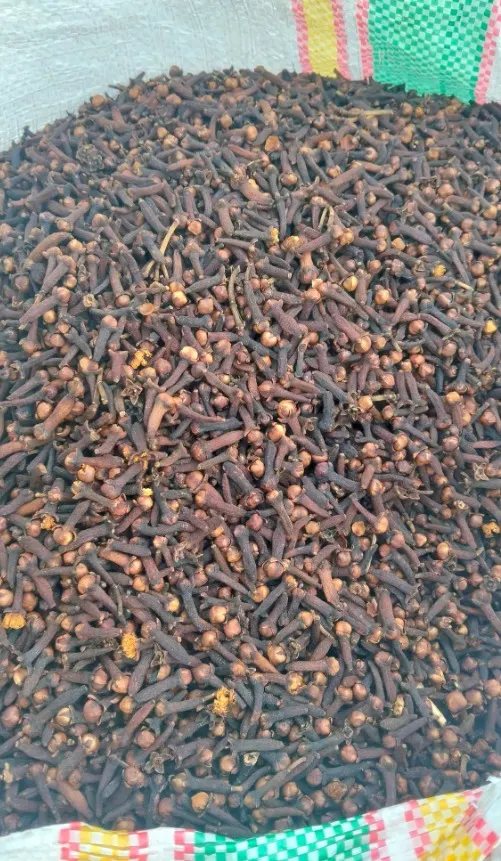
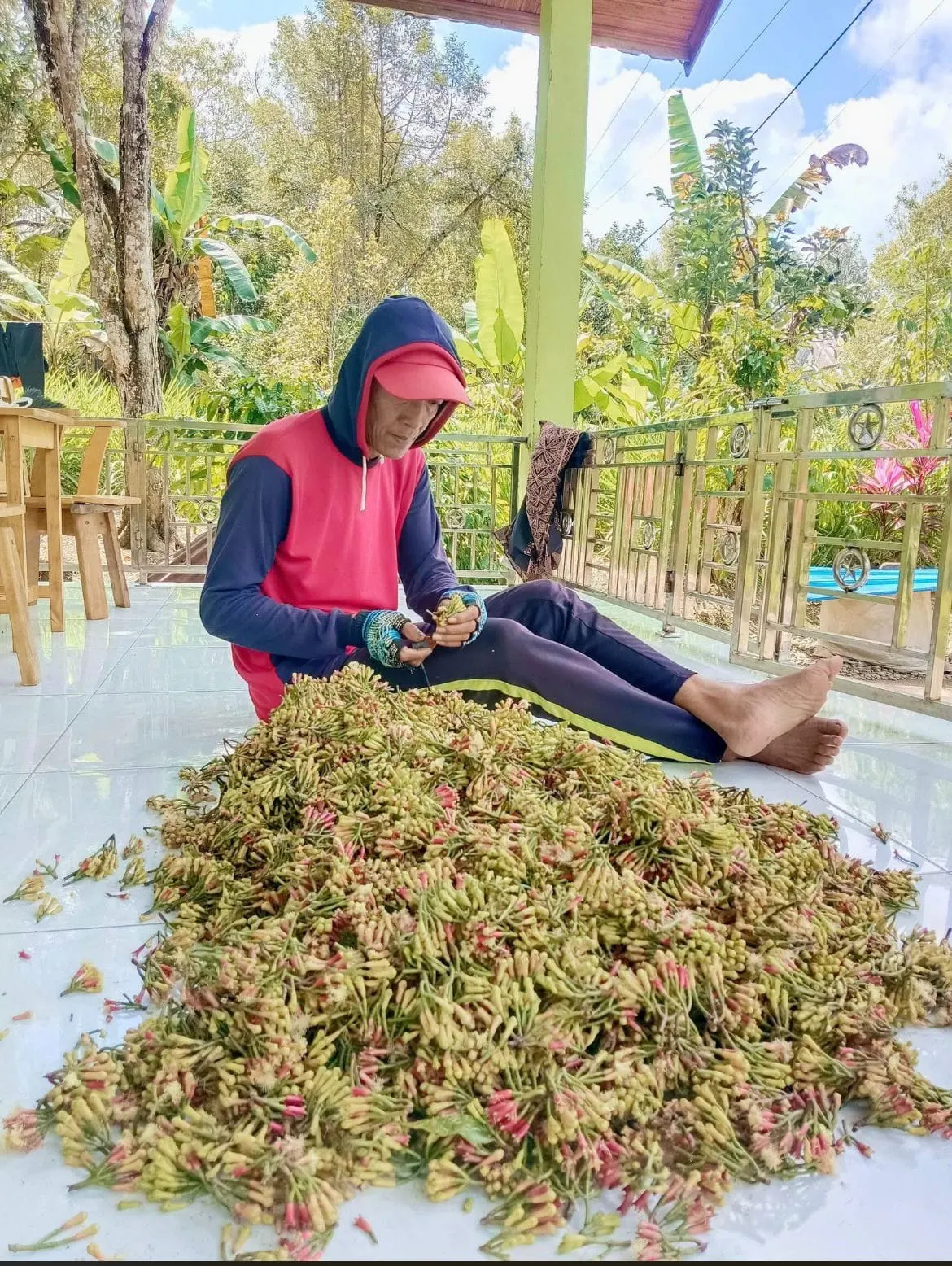
A clove is a flower bud of Syzygium aromaticum that never got the chance to open. Pickers climb the trees and take the buds by hand in clusters, just as they turn from green to pink. The buds are snapped off the cluster stems and spread out in the sun for several days, until they are dark brown and break with a clean snap.
Timing is everything. Leave the buds a few days too long and they open into flowers and lose their oil. Dry them too slowly and mould can set in. A lot of what decides the quality of a clove happens in that first week on the farm, long before anyone talks about grades.
What buyers look at
Moisture comes first. Well dried cloves are usually traded at 10 to 12%. Any wetter and you are paying for water, and taking a mould risk on a long sea voyage.
Then oil. The smell of a clove comes from its essential oil, which is mostly eugenol. Indonesian cloves are known for a high oil content, and buyers who distil or grind for flavour often write a minimum into the contract.
Then the heads. A headed clove still has its round bud on top and looks the part for retail. A headless clove lost its head somewhere between drying and bagging. It smells and grinds just as well, so headless cloves are often specified as their own product for grinding and extraction. Cluster stems are sold separately again, at a lower price, for oil. In a lot of whole cloves, stems count as foreign matter, usually limited to about 1%.
And finally, the eye test. A good lot is an even dark brown. Pale, wrinkled or whitish buds usually mean the drying went wrong.
Trade names, and why numbers matter more
| What it is often called | What that usually means | Typical use |
|---|---|---|
| Hand picked or selected | Cleaned and sorted by hand, few stems or headless buds | Retail, whole use |
| Standard or FAQ | Fair average quality, machine cleaned | Grinding, food industry |
| Headless | Mostly buds without heads | Grinding, extraction |
| Clove stems | Cluster stems only | Oil distillation |
These names are not standardised, and one exporter’s “hand picked” can be another’s “standard”. We would much rather agree the actual numbers with you: moisture, oil, foreign matter and how many headless buds you will accept.
Testing
For food use, cloves are usually tested for moisture, volatile oil, microbiology and pesticide residues. Every country has its own rules, so let us know where the cloves are going at the start. A pre-shipment sample with an independent lab report is the safest way to be sure of a lot.
Getting in touch
When you ask for a quote, it helps to tell us how you will use the cloves (whole, grinding or distillation), the moisture and oil levels you need, where they are going, and roughly how much you buy at a time.
Our cloves are hand picked and sun dried, and we sell them FOB Surabaya. The clove specification has our current figures, or you can send us your requirements. Before your first order, it is worth reading how to check a spice sample and how many tons of cloves fit in a 20ft or 40ft container.